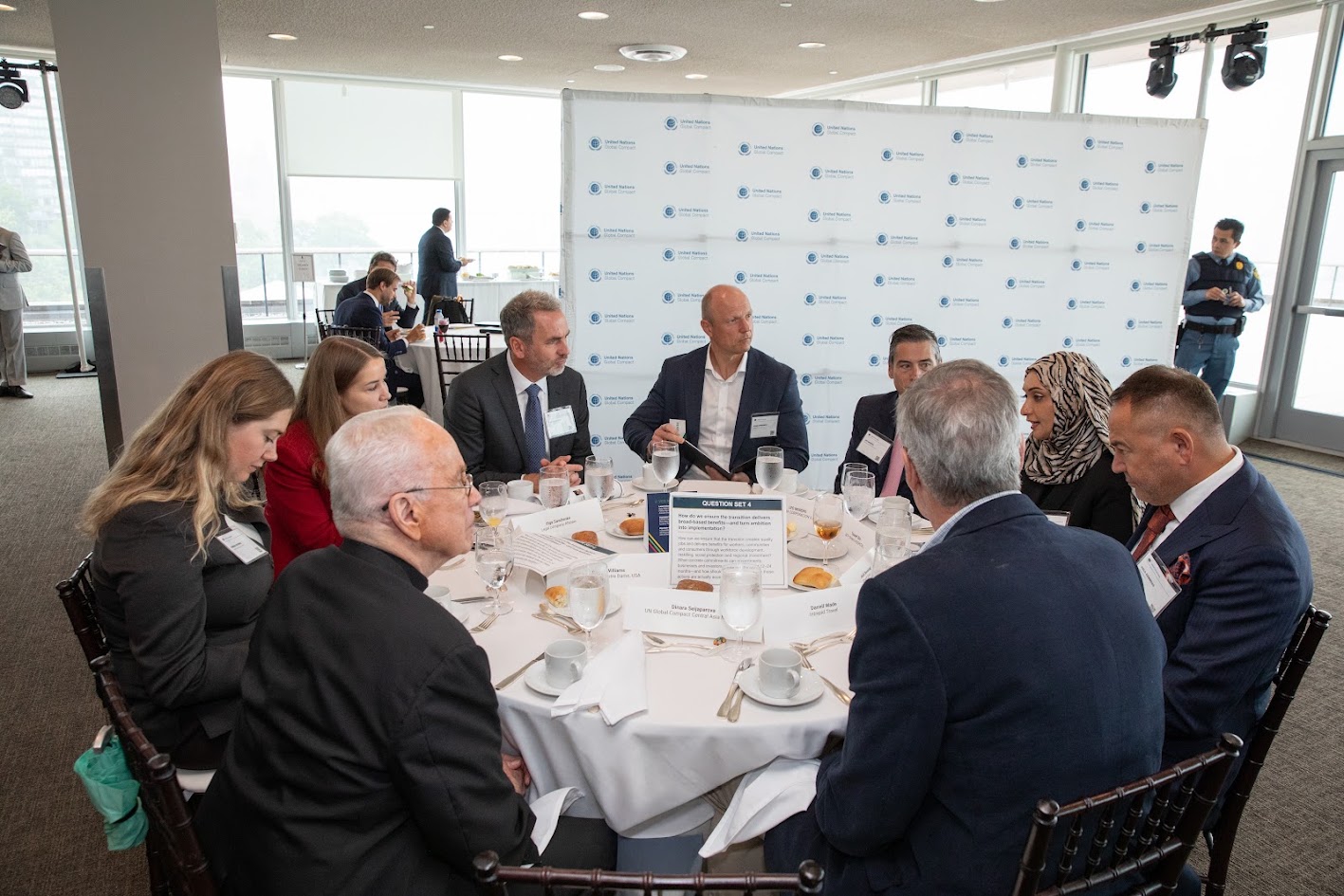
On September 15, Kyiv hosted the 11th Business & Legal Energy Forum, which brought together about 150 participants—representatives of the state, energy sector businesses, specialized associations, financial institutions, and the expert community. For the sixth consecutive year, Altelaw&Sempra served as the general partner of the forum.
At the center of discussions were topics well known to us from our own practice: the balance between centralized and distributed generation, the volume of new flexible power capacities, the role of RES and energy storage systems, grid modernization, and sources of financing for new projects.
This year, the forum became carbon-neutral: electricity consumption was verified with cancellation certificates of guarantees of origin. Elementum Energy canceled 150 MWh of guarantees of origin for electricity generated by a wind power plant.
First Session: Challenges and Energy System Development Strategies
The forum opened with a first session dedicated to energy sector reconstruction, European integration requirements, decentralized generation, and financing, moderated by Olha Savchenko, Senior Partner at Altelaw&Sempra.
Andriy Herus, Chairman of the Verkhovna Rada Committee on Energy, Housing and Utilities Services, noted during the session that during the most challenging periods of the war, missile and drone attacks damaged approximately 7,500 MW of capacity. Under the Ukraine Facility program, only one bill remains unadopted—on strengthening the institutional capacity and independence of the NEURC (National Energy and Utilities Regulatory Commission). The speaker emphasized that green generation cannot develop without energy storage installations, as balancing it with gas is too expensive. The issue of grid connection remains acute:
“We need to develop connection processes because it is a huge problem. There is some bureaucracy, and a very big issue with corruption… not in all oblenergos, not in all DSOs, but unfortunately, it exists in many.”
Regarding negative market prices, he noted: “Negative prices are a correct pricing mechanism, just like in Europe.”
Andriy Konechenkov, Chairman of the Board of the Ukrainian Wind Energy Association (UWEA), reported that 2026 could become a record-breaking year for Ukrainian wind power: as of early September, about 588 MW had been connected, with 750–800 MW expected by the end of the year. The industry’s project pipeline stands at around 10 GW at various stages of implementation. He also highlighted the resilience of wind energy to war risks—less than 1% of turbines in government-controlled territories have been damaged.
By the way, 70% of participants supported the development of distributed generation, according to interactive voting results during the forum.
Hanna Zamazieieva, Head of the State Agency on Energy Efficiency and Energy Saving of Ukraine (SAEE), pointed out that energy efficiency in Ukraine remains a potential rather than a result:
“We have almost no results in this direction—only exceptional and situational cases in certain areas.”
According to her data, energy costs in the spring accounted for up to 70% of the cost price of a greenhouse tomato, while the total potential for energy efficiency measures across the national economy is estimated at €50 billion. Separately, the speaker drew attention to Draft Law No. 15386, which creates the framework for implementing CBAM and the Emission Trading System in Ukraine.
Oleksandr Pikalov (DTEK Energo) addressed the reform of imbalance pricing and non-compliance charges on the balancing market, noting that the reason for failing to submit a bid is not always the participant’s own actions, but often technical limitations. He summarized the market’s perspective on dialogue with the regulator:
“We are still slightly opponents to each other, but I believe that this struggle sometimes gives birth to normal, effective solutions that are accepted by the market.”
Oleksandr Baraniuk (“Smart Power Grids of Ukraine”) estimated the investment need for Distribution System Operator (DSO) networks alone at around $12 billion per year, whereas individual DSO programs are measured in hundreds of millions of hryvnias. He urged big business to consider direct investments in operators:
“I would have long been thinking about simply buying DSOs.”
Maksym Marchenko, Head of the Association of Distributed and Flexible Generation Market Players, emphasized that further development of distributed generation is impossible without clear rules and stable settlements: “No revenue means no profits, and no investment programs that can be executed.” According to him, the sector needs up to 700 million cubic meters of gas at a weighted average price, and the association is asking the state for 21,000 UAH, offering jobs, taxes, and new generation capacities in return.
Yaroslav Teklyuk (“Gas TSO of Ukraine”) outlined the new role of the Ukrainian Gas Transmission System in the European energy balance. Despite the system currently operating at only about 10% of its design capacity, its scale remains a strategic advantage:
“Despite the ongoing destruction, the Ukrainian Gas Transmission System continues to function properly.”
Promising areas include utilizing Ukrainian underground storage facilities as a “European power bank,” transporting biomethane, and participating in the Central European Hydrogen Corridor project.
Energy Storage Systems: Altelaw&Sempra’s Perspective
Ihor Retivov, Partner at Altelaw&Sempra, hosted an open interview with Oleksandr Havva, Acting CEO of JSC “Market Operator,” exploring the economics of energy storage systems. The conversation focused on ancillary services and price arbitrage as the primary monetization mechanisms for such installations—a topic closely aligned with comments made during the session by both Andriy Herus and Ihor Olekhov, who described hybridizing generation with storage as virtually mandatory for securing financing.
You can watch the full interview with Oleksandr on our YouTube channel via this link: https://www.youtube.com/watch?v=LdbK3pkRqZg&t=217s
Permit Procedures and Construction of Energy Facilities
Olha Sydorchuk, Partner in the Construction Practice at Altelaw&Sempra, discussed urban planning and permitting procedures, as well as the regulatory conditions that significantly determine the implementation of energy projects and the level of investor risk.
Olha noted that as of 2026, a number of simplified procedures exist regarding the construction of energy storage systems, mini-CHPs, etc. However, this does not exempt developers from complying with permitting procedures, as commissioning every facility remains mandatory.
It was a truly insightful discussion about the solutions that will define Ukrainian energy for years to come. See you at next year’s forum—subscribe to our news on Facebook so you don’t miss the announcement.