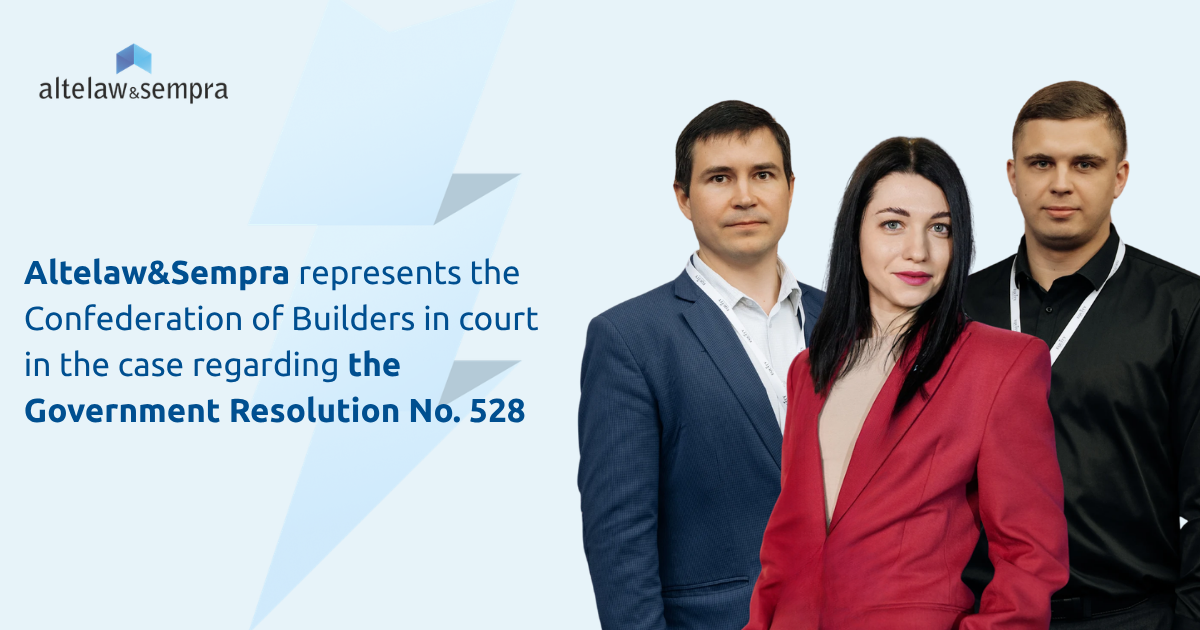
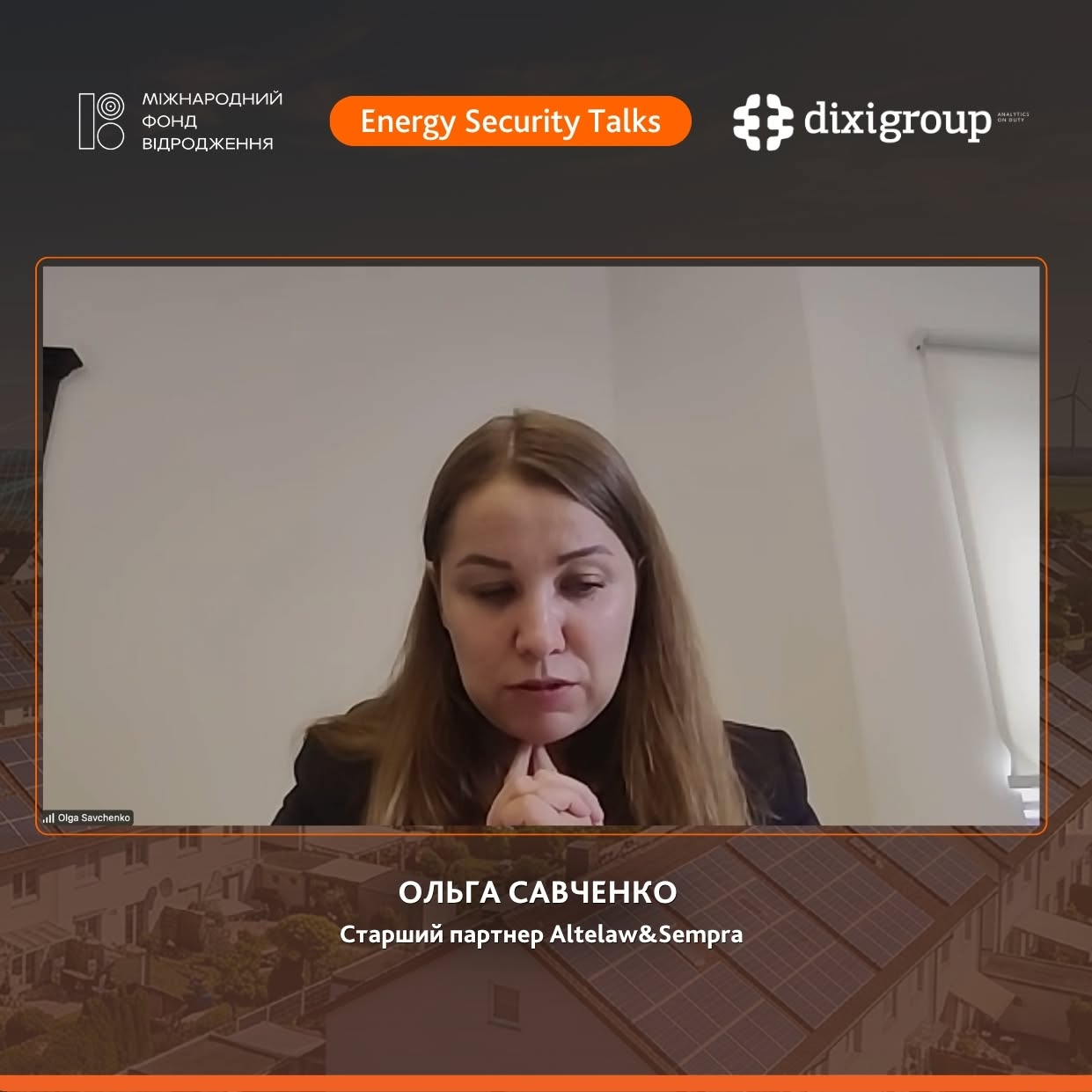
Olga Savchenko, a member of the UBA Committee on Energy, Oil and Gas and senior partner of Altelaw Law Firm prepared a detailed article on cogeneration units together with Mykhailo Zhurkevych, senior associate of Altelaw Law Firm, technology features, connection procedure, and necessary documentation.
Due to the constant shelling of the Ukrainian energy system facilities by the Russian Federation, there is an urgent need to decentralize the energy system and develop small and maneuverable energy, which can be achieved by installing co-generation (gas mainly) units.
Having included the need for the rapid import and construction of cogeneration facilities, several changes were made to the regulatory framework in 2024 to simplify the import and construction of such facilities, as discussed below.
Peculiarities of import
The Law of Ukraine “On Amendments to Subsection 2 of Section XX ‘Transitional Provisions’ of the Tax Code of Ukraine regarding the exemption from value added tax on the import of goods for the production and repair of mechanized demining machines” No. 3853-IX of 16.07.2024 and the Law of Ukraine “On Amendments to the Customs Code of Ukraine regarding the exemption from import duty on goods for the production and repair of mechanized demining machines, goods that contribute to the restoration of energy infrastructures” and on certain peculiarities of customs clearance of goods intended for security and defense needs” No. 3854-IX dated 16.07.2024 established exemption from VAT and import duty in the period from 27.07.2024 – 01.01.2026 for operations on importation of the following goods into the customs territory of Ukraine by the UKTZED (only items related to cogeneration units are listed):
- 8406 (other than 8406 10 00 00) – Steam turbines and other steam turbines (other than turbines for converting energy into electricity);
- 8410 – Hydraulic turbines, water wheels, and regulators (only hydraulic turbines and parts thereof);
- 8411 (except for turboprop and turbojet engines and parts thereof) – Turbojet and turboprop engines and other gas turbines;
- 8501 64 00 00 – Alternators with a capacity of more than 750 kVA;
- 8504 40 90 00 (except inverter welding machines) – Static converters: other;
- 8537 (except for 8537 10 98 10) – Control panels, panels, consoles, tables, cabinets, and other bases equipped with two or more devices of heading 85.35 or 85.36 for electrical control or distribution of electricity (except for those intended for automobiles).
In case of importation into the territory of Ukraine of goods with the above-mentioned codes of the Ukrainian Classification of Goods for Foreign Economic Activity and after verification at the time of customs clearance of the goods for compliance with the specified codes, the rate of value-added tax and customs payment will be 0% of the declared value of the goods. Moreover, the mentioned benefit applies only to imports for their use (construction) and cannot be used for further resale.
Construction and connection of cogeneration units to the grid
Construction
The procedure for the construction or placement of cogeneration units during martial law was simplified following Resolution of the Cabinet of Ministers of Ukraine No. 547 dated May 14, 2024, which amended Resolutions of the Cabinet of Ministers of Ukraine No. 1010 dated December 13, 2017 and No. 1320 dated December 7, 2023.
According to the Resolution of the Cabinet of Ministers of Ukraine No. 1320 dated 7 December 2023 (as subsequently amended, referred to as Resolution No. 1320), the construction and placement of gas reciprocating and gas turbine plants with a capacity of 1 MW or more is carried out without the need to obtain some permits required in peacetime. This allows for a significant decrease in the time required to prepare for construction and a faster response to energy challenges.
Nevertheless, during the period of martial law, the construction of cogeneration units is carried out without:
- appropriate urban planning documentation;
- obtaining urban planning conditions and restrictions on land development;
- receiving a report on the results of the project documentation examination;
- obtaining the right to perform construction works;
- use of the Unified State Electronic System in the field of construction.
- Resolution No. 1320 also provides for the use of land plots (regardless of their intended purpose) for the placement of cogeneration plants without prior seizure or allocation, subject to the approval of such use by the relevant owners or managers of the land plot.
To put cogeneration plants into operation
To put cogeneration plants into operation, it is also not necessary to obtain a certificate of acceptance of the completed facility. The start of operation is permitted after comprehensive testing of electrical installations and is based on a certificate of readiness for operation.
Meanwhile, it is stipulated that after the end of martial law, business entities are given up to 6 months to register property rights to land plots, develop and approve project documentation, obtain an expert examination report, and a certificate of acceptance of the facility into operation.
Connection to gas distribution networks
The procedure for connecting to gas distribution systems is regulated by Resolution of the National Energy and Utilities Regulatory Commission No. 355 dated 29.03.2022 (hereinafter – Resolution No. 355)during martial law.
According to the Resolution, gas distribution system operators are obliged to ensure the connection of facilities, including cogeneration units, for which there is a certificate from the military administration in case of urgent connection.
The simplified procedure for connecting to gas distribution networks stipulates that to connect cogeneration units, gas distribution system operators must:
- To provide the customer with information on technical capacity and free capacity for new connections within 2 calendar days free of charge;
- do not require the customer to provide copies of documents confirming the right of ownership or use of the facility or land plot when applying connection;
- to ensure the relocation of existing components of the gas distribution system at their own expense, if necessary for the connection of new facilities;
- to connect the customer’s facility to the gas distribution system within two calendar days after submitting supporting documents on the commissioning of the domestic gas supply networks.
Resolution No. 355 also stipulates that gas distribution system operators must ensure the connection of the customer’s facility within one month after the conclusion of the connection agreement and the completion of all necessary procedures, including the construction of external gas supply networks, installation and commissioning of a commercial gas metering unit, and gas supply to the customer’s facility.
In case of inability to obtain the necessary documents or approvals during martial law, such issues are allowed to be settled after the termination or lifting of martial law.
Connection to the power grid
The connection of cogeneration plants to the power grids during martial law is regulated by NEURC Resolution No. 352 of 26.03.2022 (hereinafter – Resolution No. 352), which establishes special conditions for the connection of newly built, reconstructed, or technically re-equipped electrical installations to the electricity distribution system.
Specifically, Resolution No. 352 provides that connection is possible based on an application from a business entity, which must contain technical parameters of electrical installations, graphic materials indicating the location, as well as a certificate from the military administration on the need for urgent connection. Following the receipt of the application, the distribution system operator (DSO) is obliged to provide the customer with signed drafts of the connection agreement and technical specifications within two calendar days from the date of registration of the application. Existing energy infrastructures are prioritized for connection.
In the case of connection to the grid to supply electricity to the general grid, the DSO is obliged to connect the cogeneration unit within two calendar days after fulfilling the technical conditions and signing the act of connection service provision.
The technical conditions must be agreed upon with the transmission system operator for installations with a capacity of more than 5 MW, which ensures compliance with the safety requirements of the integrated power system of Ukraine.
At the same time, cogeneration plants used for autonomous (backup) power supply do not need to obtain a connection service if such plants do not operate in parallel with the integrated power system of Ukraine.
In addition, it is worth noting that electricity generation by cogeneration plants with a capacity of up to 5 MW is not subject to licensing, which also helps to expand opportunities for businesses that want to integrate cogeneration plants into their infrastructure swiftly.
The Use of Cogeneration Installations
Foremost, the simplification of cogeneration installation setup for businesses is associated with encouraging them to independently meet their electricity needs. In fact, as it is evident from the above, the installation of cogeneration units for self-supply requires minimal documentation. Moreover, when using gas for cogeneration installations, it can be purchased at a special price.
However, if a company intends to partially sell the generated electricity, it should be noted that this is only possible through the sale of electricity on the energy exchange.
Thus, it can be summarized that the simplified construction and connection procedures, recently established by relevant regulations, open up new opportunities for cogeneration generation. Especially, the simplification of procedures for connecting to gas distribution and electric grids significantly reduces the time required to bring cogeneration installations into operation.
However, it is worth noting that these changes also carry certain risks. The simplification of procedures may result in the networks being insufficiently prepared to integrate numerous cogeneration installations, which could cause technical problems in the future. Additionally, the temporary nature of the simplified requirements will necessitate further actions after the end of martial law to complete all necessary documents and permits.
Accordingly, the implementation of cogeneration installations is a positive step for the development of small and flexible energy systems in Ukraine. However, it is important to continue adapting the regulatory framework to minimize risks and ensure the long-term stability of the energy system.