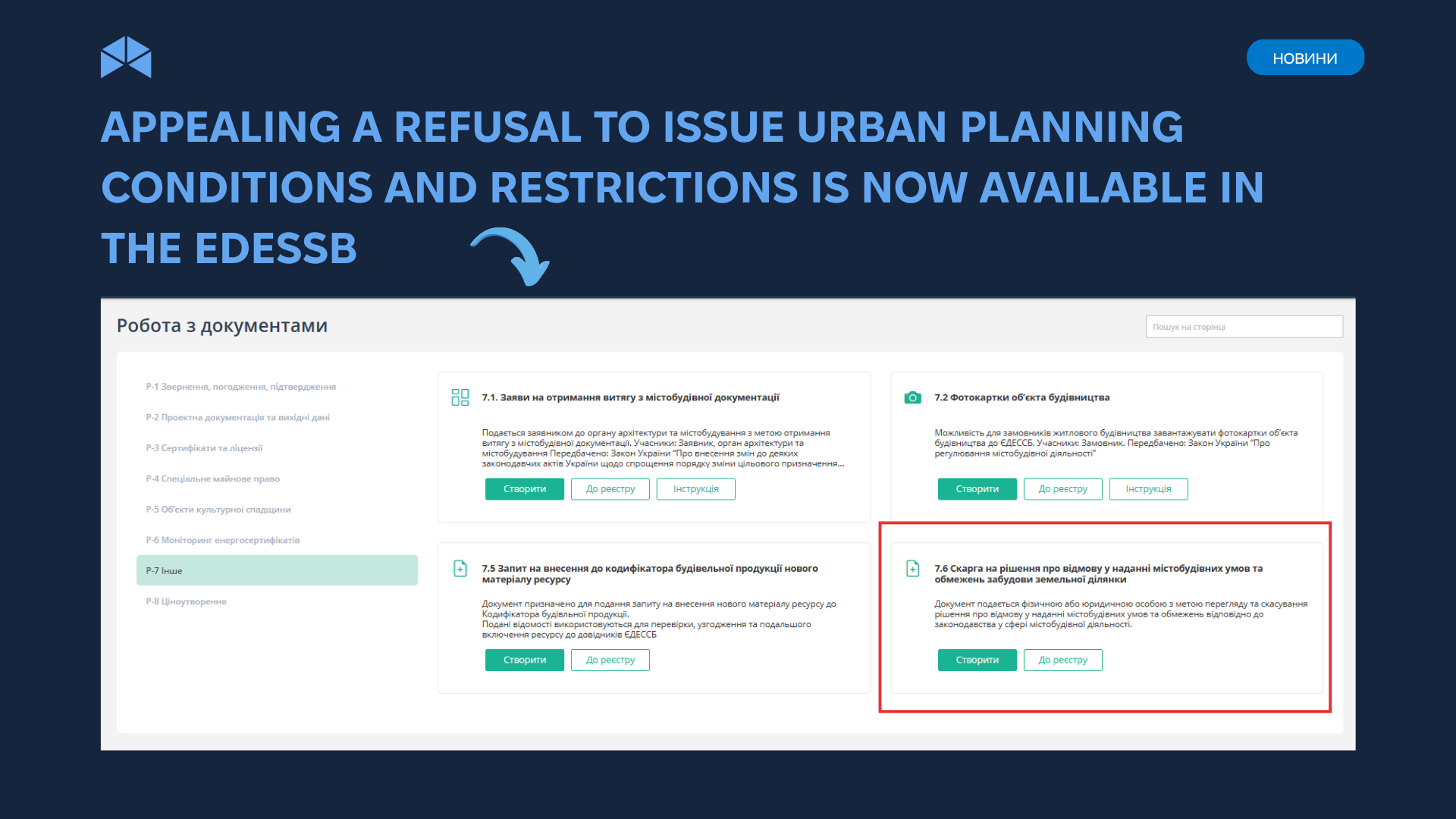
Are you planning the construction of a new industrial or energy facility, a residential complex, or the reconstruction of an existing one? Requirements for permit documentation, shelters, and civil defense structures changed in 2026, alongside special regulatory regimes for energy facilities. All these updates must be factored into your legal and design teams’ workflows. All permit and design documentation is now processed through the E-System (EDESSB), where any formal inaccuracy automatically blocks documents and halts the project.
We invite your teams on September 11 to a 5-hour practical workshop, “Permit Support for Construction 2026: Procedures, Errors, Risks of Rejection.” Speakers will analyze the full project lifecycle from development intent to commissioning, specific design features, permit acquisition for special facility categories, automatic registration nuances, common mistakes, and causes of rejection.
Participants will have the opportunity to ask questions directly to regulatory representatives.
Registration Link: https://dku.in.ua/register?id=145
SPEAKERS:
- Olha Sydorchuk: Partner, Head of Construction Practice at Altelaw&Sempra, Member of the Board of Directors of the Confederation of Builders of Ukraine.
- Vasyl Hoshovskyi: Deputy Head – Head of the Licensing and Registration Division of the Service Department at the State Inspectorate of Architecture and Urban Development of Ukraine (DIAM).
- Anastasiia Sokolova: Acting Head of the Department for Implementation of Information and Communication Digital Technologies at DIAM.
- Svitlana Babych: Director of the Service Department at DIAM.
FORMAT: Offline in Kyiv (Generator Center near “Maidan Nezalezhnosti” / “Khreshchatyk” metro stations) or Online (Zoom).
Organizer: Business Club. Information Partner: Confederation of Builders of Ukraine. Media Partner: Prof Build magazine.
WHO SHOULD ATTEND:
- Developers and Investors: Obtain a comprehensive, delay-free lifecycle framework.
- Designers: Learn how to avoid critical errors in design documentation, expert review, and shelter design.
- General Contractors: Learn how to secure work permits and commission projects on schedule.
- In-House Legal Teams: Receive an updated regulatory roadmap and project checkpoints.
- Supervision Engineers & E-System Users: Gain practical insights into the specific technical points where documentation most frequently gets blocked.
TAKEAWAYS:
- Practical step-by-step algorithms for every project phase.
- Analysis of typical grounds for rejection by the regulatory authority.
- Clear criteria regarding civil defense shelter requirements.
- Complete understanding of special and simplified procedures for energy facilities.
SCHEDULE:
- 09:20–10:00 Registration
- 10:00–11:30 Session 1
- 11:30–11:50 Coffee Break & Q&A
- 11:50–13:20 Session 2
- 13:20–14:00 Lunch & Q&A
- 14:00–15:30 Session 3
- 15:30–16:00 Q&A Session
PARTICIPATION FEES:
- Online Webinar: UAH 4,600 (excl. VAT).
- On-Site (Kyiv): UAH 5,300 (excl. VAT).
- Personal discounts available for CBU and SUP members, as well as for groups of 2, 3, or more participants. Contact: +380 67 506 80 61 (Viber, Telegram), +380 95 271 45 90.
Registration Link: https://dku.in.ua/register?id=145
WORKSHOP PROGRAM:
Module 1. GENERAL CONSTRUCTION AND COMMISSIONING PROCEDURE
- General algorithm of a construction project from development intent to commissioning.
- Required documents to obtain before the design phase starts.
- Cases requiring Urban Planning Conditions and Restrictions (MUO) vs. Building Passports or alternative documents.
- Procedure for obtaining the right to perform preparatory and construction works.
- Cases requiring a notice of commencement of construction works.
- Cases requiring a full construction permit.
- Definition of preparatory works and activities allowed under a preparatory notice.
- Stage at which the consequence class (CC) is determined and responsible parties.
- Typical initial errors leading to permit rejections or commissioning issues.
Module 2. DESIGN & PERMIT FEATURES FOR SPECIFIC FACILITY CATEGORIES
10. Specific permit requirements for gas stations (AZS).
11. Common design and submission errors for gas stations.
12. Design and permitting features for wind power plants (WPP).
13. Consequence classification issues for wind power plants and energy facilities.
14. Permit procedures for Energy Storage Systems (ESS); applicability of Cabinet Resolution No. 1320.
15. Determining eligibility for special or simplified energy facility procedures.
16. Permit documentation for townhouses and mass single-family housing.
Module 3. DESIGN OF SHELTERS AND CIVIL DEFENSE STRUCTURES
17. Mandatory requirements for civil defense shelters in design documentation.
18. Key regulatory design standards for shelters.
19. Shelter requirements for new non-residential, industrial, warehouse, or energy construction.
20. Shelter requirements during facility reconstruction.
21. Determining shelter requirements for industrial facilities based on worker and visitor headcount.
22. Impact of workforce/occupancy size on shelter necessity.
23. Missing shelter documentation as grounds for commissioning rejection.
Module 4. NEW RESOLUTIONS AND ALTERNATIVE MECHANISMS IN CONSTRUCTION
24. Key provisions of Cabinet Resolution No. 528 on selecting alternative review bodies.
25. Administrative services accessible via DIAM instead of local bodies.
26. Facility eligibility criteria for the alternative mechanism.
27. Selecting the review body within the E-System (EDESSB).
28. Rules on changing the review body post-submission.
29. Procedure and grounds for appealing Urban Planning Conditions (MUO) via DIAM.
30. Applicability, limits, and exceptions of the Development Intent Scheme vs. MUO.
31. New procedural rules for cottages, homesteads, and individual housing.
32. Key differences between Building Passports, Development Intent Schemes, and MUO.
33. Common mistakes when drafting Development Intent Schemes.
Module 5. FACILITY COMMISSIONING
34. Mandatory physical completion requirements before submitting for commissioning.
35. Documentation verified by inspectors during certificate review.
36. On-site inspection checks and protocols.
37. Common non-compliances leading to certificate refusal.
Module 6. AUTOMATED REGISTRATION & E-SYSTEM PROCEDURES
38. Automated registration mechanics for CC1 (low-consequence) facilities.
39. Mandatory conditions for successful automated registration.
40. System data validation points in EDESSB.
41. System triggers that block automatic processing.
42. Protocols for correcting errors in submitted or registered documents.
Module 7. FREQUENT ERRORS AND GROUNDS FOR REJECTION
43. Most common grounds for construction permit refusals.
44. Most common grounds for certificate of readiness (commissioning) refusals.